
How to Prepare for a Puppy: The Complete Checklist

How to Prepare for a Puppy: The Complete Checklist
Heads up. Some links in this article are affiliate links. If you buy through them we may earn a commission at no extra cost to you. As an Amazon Associate we earn from qualifying purchases.
The quiet before the puppy arrival
You are likely sitting in your living room right now, perhaps with a cup of coffee, looking at a corner of the room where a dog bed will soon sit. It is quiet. Your shoes are safely on the floor, and your phone charger is dangling within reach of the rug. In a few days, that quiet will be replaced by the frantic pitter-patter of tiny paws and the occasional high-pitched yip. To make this transition as smooth as possible, following a simple puppy preparation checklist is the best way to ensure you are not running to the store for paper towels at midnight while a tiny ball of fur explores your kitchen floor. We have all been there, and a little bit of prep work goes a long way in keeping you calm when the chaos begins.
Preparing for a puppy is about more than just buying the cutest toys you can find. It is about creating a safe environment where your new friend can learn the rules of the human world without getting into trouble. Every puppy is different; some will sleep through their first night without a peep, while others might find the transition a bit more startling. By getting your supplies, your home, and your family plan in order now, you can focus on building a bond instead of worrying about whether you forgot to buy poop bags. This guide will walk you through everything you need to know to get ready for your new family member.
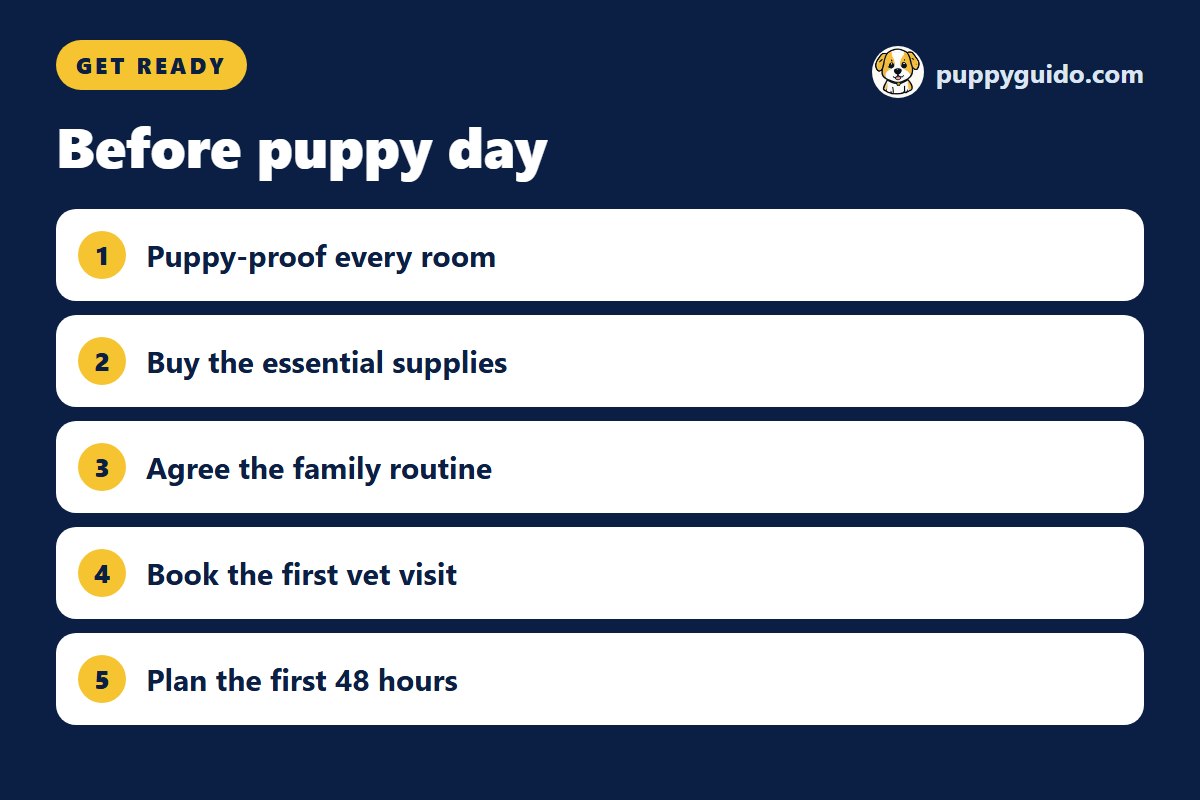
Puppy-proof your home
The first thing you should do is get down on your hands and knees. It sounds silly, but seeing your home from a puppy’s perspective is the only way to spot the hidden dangers. From down there, that loose thread on the rug looks like a fun tug-of-war toy, and the electrical cord behind the television looks like a very chewable vine. Puppies explore the world with their mouths, and they do not know the difference between a chew toy and your favorite pair of leather loafers.
Start by clearing the floor of anything small enough to be swallowed. This includes children’s toys, hair ties, and loose change. Check your houseplants as well; many common indoor plants can be toxic to dogs if nibbled. You might want to move them to higher shelves or a room the puppy cannot access. If you have stairs, consider where you will place baby gates to prevent any accidental tumbles or unsupervised adventures into the upper floors of your house. It is much easier to set these boundaries now than to try and teach them while a puppy is zooming past your feet.
Outdoor spaces need a look too. If you have a yard, check the perimeter for any gaps in the fence. A tiny puppy can squeeze through surprisingly small spaces. Look for any garden chemicals or fertilizers that might be within reach. Even if you plan to always supervise your puppy outside, it only takes a second for them to find something they shouldn't. Creating a safe "puppy zone" inside the house, perhaps using a playpen or a specific room with easy-to-clean flooring, will give you a place to put the puppy when you need to shower or answer the door without worrying about what they might be chewing on.
The essential supplies
Walking into a pet store can be overwhelming. There are aisles of colorful gadgets, but you really only need a few high-quality basics to start. When people ask what they really need, the answer usually falls into four categories: eating, sleeping, safety, and cleaning. You do not need the most expensive version of everything, but you do need items that are durable and safe.
For eating, stainless steel or ceramic bowls are often better than plastic because they are harder to chew and easier to keep clean. You will also want to find out exactly what food the breeder or shelter has been using. Switching a puppy’s diet suddenly can lead to an upset stomach, which is the last thing you want to deal with on day one. If you want to change their food, do it slowly over a week or two by mixing the old and new food together.
| Category | Essential Item | Purpose |
|---|---|---|
| Sleeping | Crate & Bedding | Provides a safe, den-like space for rest and potty training. |
| Cleaning | Enzymatic Cleaner | Breaks down odors so the puppy isn't tempted to go in the same spot. |
| Safety | Adjustable Collar & Leash | Essential for walks and keeping the puppy close in new environments. |
| Engagement | Soft & Hard Toys | Helps with teething and provides mental stimulation. |
| Grooming | Puppy Shampoo & Brush | Keeps them clean and gets them used to being handled. |
Don't forget the cleaning supplies. No matter how diligent you are, accidents will happen. An enzymatic cleaner is a non-negotiable item because it actually breaks down the proteins in urine, removing the scent that tells a puppy "this is a bathroom." Regular household cleaners might smell fresh to you, but a dog’s nose can still pick up the lingering scent, leading them back to the same rug for a repeat performance.
What you need for the first 48 hours
The first two days are a period of massive adjustment for both you and the puppy. They have just left everything they know—their mother, their littermates, and their familiar environment. They might be quiet and shy, or they might be restless and vocal. When planning those first 48 hours, think about comfort and routine. You want to keep things low-key. Resist the urge to invite the whole neighborhood over to meet the new arrival. Give the puppy time to learn your scent and the layout of their new home first.
Prepare for a few interrupted nights of sleep. A puppy’s bladder is tiny, and they will likely need a bathroom break in the middle of the night. Have your shoes and a jacket by the door so you can get them outside quickly when they wake up. If they cry in their crate, sometimes just hearing your voice or having the crate near your bed can help them feel less alone. It is a big world, and they are very small. Patience is your most valuable tool during this window. If you find yourself feeling tired or frustrated, remember that this phase is temporary and you are both learning a new language together.
Establishing a family plan and routine
Consistency is the secret to a well-adjusted dog. Before the puppy arrives, sit down with everyone in the household and decide on the rules. Will the puppy be allowed on the furniture? Who is responsible for the 6 am walk? What word will you use for potty time? If one person says "potty" and another says "outside," the puppy will take much longer to understand what you want. Write these cues down and stick them on the fridge so everyone is on the same page.
A schedule helps a puppy feel secure. They thrive when they know when to expect food, naps, and play. Try to keep meal times and wake-up times consistent, even on the weekends. This predictability helps with potty training because you will start to notice their natural rhythms. Most puppies need to go outside immediately after waking up, after eating, and after a vigorous play session. By anticipating these needs, you can set them up for success and minimize the number of accidents you have to clean up inside.
Finding your veterinary partner
Do not wait until your puppy is home to find a veterinarian. Many clinics are busy and may not be taking new patients immediately, so call around a week or two before your puppy arrives. Your first visit is usually for a general wellness check and to discuss a vaccination schedule. This is also a great time to talk about flea, tick, and heartworm prevention. For any specific health concerns, dosages, or medical questions, you should always contact your veterinarian directly as they are the only ones who can provide professional medical advice for your specific pet.
During that first visit, ask about local puppy socialization classes. These are often held at vet clinics or training centers and are a great way for your puppy to meet other dogs in a controlled, safe environment. Our puppy socialization checklist explains what to introduce before and after vaccines. Your vet can also advise you on when it is safe to take your puppy to public parks or high-traffic areas based on their vaccination status. Protecting their health while they are young is the foundation for a long, happy life together.
When to ask a professional
While raising a puppy is something you can certainly do with patience and research, there are times when calling in a professional trainer or behaviorist is a smart move. If you feel overwhelmed, or if your puppy is showing signs of extreme fear or guarding their food, a professional can provide a tailored plan. Early intervention using positive reinforcement techniques can prevent small issues from becoming lifelong habits. There is no shame in asking for help; even experienced dog owners benefit from a fresh set of eyes on a tricky behavior.
Frequently Asked Questions
How long does it take to potty train a puppy?
Potty training varies significantly between individual dogs. Some puppies catch on within a few weeks, while others may take several months to be fully reliable. Factors like the puppy's age, breed, and your consistency in taking them outside play a huge role. The key is to remain patient and always use positive reinforcement when they get it right.
Should I let my puppy sleep in my bed the first night?
While it is tempting to snuggle, many experts suggest starting with a crate or a designated dog bed near your own bed. This helps with potty training and teaches the puppy to be comfortable in their own space. If they start their first night in your bed, it can be much harder to transition them to their own space later on.
What should I do if my puppy won't stop biting?
Puppy biting is a natural part of teething and exploration. Instead of scolding, redirect their mouth to a toy or a chew. If they are very nippy, it often means they are overstimulated or tired and need a nap. Consistent redirection and providing appropriate things to chew on will help them learn what is off-limits.
How much exercise does a young puppy need?
Puppies have lots of energy but also need a lot of sleep. Short bursts of play and brief walks are better than long, strenuous hikes while their joints are still developing. A good rule of thumb is about five minutes of formal exercise per month of age, up to twice a day, but always watch your puppy for signs of tiredness.
Preparing for your new arrival is a big task, but seeing that wagging tail for the first time makes every bit of effort worth it. You are starting a wonderful journey together. For more detailed tips on getting through those first few weeks, Get the free New Puppy Survival Guide.
Disclaimer. PuppyGuido provides general educational information and does not replace advice from a qualified veterinarian or professional trainer.
Keep reading
Puppy Harness or Collar? A Simple Guide for New Owners
Collar or harness? Here is how to choose for comfort, ID tags, walks, and the growth spurts that make sizing tricky.
Read articlePuppy Playpen: Do You Need One and How to Use It
A puppy playpen can be a safe, short-term play space, as long as you use it with care and never as long-term confinement.
Read article
First Week With Puppy: What to Do Day by Day
Your puppy is home and you are not sure what comes next, so here is a calm, practical plan for the first seven days.
Read article