
First Week With Puppy: What to Do Day by Day
First Week With Puppy: What to Do Day by Day
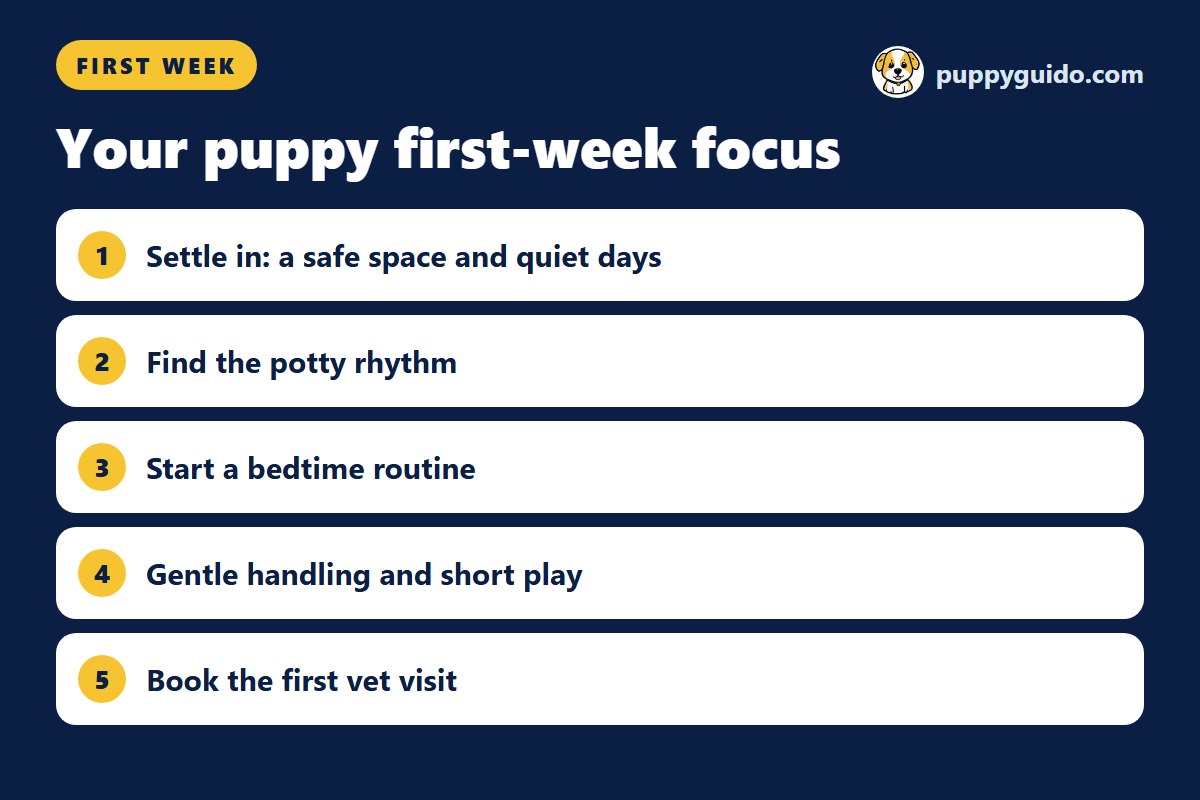
Your puppy has been home for about twenty minutes and you are already kneeling on the kitchen floor with a roll of paper towel, wondering whether that small puddle counts as a win. If you are looking for what to do in the first week with a puppy, the short answer is that this week is about settling in, not training. Create one quiet safe space, keep the day predictable, take your puppy outside often, expect lots of sleep and a few night wake-ups, handle them gently, and book a vet visit early. Everything else builds from there.
Every puppy is different. Some walk into the house like they own it, while others hide under the sofa for a day. Treat the plan below as a rhythm to lean on rather than a test you have to pass. A first week with puppy schedule only needs to be simple enough that you can repeat it on a bad day, because bad days will happen.
Day one: arrival and a quiet corner
The first day with a puppy is mostly about arriving calmly. Your puppy has just left their mum, littermates and the only smells they knew. Many arrive tired, a bit travel sick and overwhelmed. If you are wondering what to do on the first day with a puppy, start with the basics. Let them out of the carrier in the garden or near the toilet spot, show them where their bed is, and then leave them alone for a while. Resist the urge to introduce every family member, neighbour and sofa cushion in the first hour.
Keep visitors away for the first day or two if you can. A small, calm house is kinder than a party. Most welfare guidance on bringing a puppy home takes this same low-key approach, and in our experience the afternoon goes much better when the puppy has had a nap somewhere quiet and a short, gentle walk outside.
Safe space and puppy-proofing the home
A safe space is a small area, often a crate with the door open or a playpen in a quiet room, where your puppy can rest without being approached. It should have a bed, fresh water, a chew and a view of you if possible. Keep it out of draughts and away from the noisiest appliance. Our crate training guide walks through how to make that space feel inviting rather than like a time-out corner.
Puppy-proofing matters more than most people expect. Puppies chew everything in the first days, and a chewed slipper is the usual first lesson in what your home contains. Before you go to bed each night, check the following:
- Electrical cables are tucked away or covered.
- Medicines, cleaning products and batteries sit up high in a closed cupboard.
- Houseplants are checked for toxicity, and any doubtful ones move out of reach.
- Shoes, socks and tea towels are behind a door.
- Stairs are closed off with a gate.
Pick up the things you care about every evening rather than cleaning up after them in the morning. It is a small habit that saves a lot of shoes.
A routine that repeats each day
Puppies do best when the day has a shape. Meals, toilet breaks, play, rest and quiet time should come in roughly the same order each day. You are not aiming for perfect timing. You are giving your puppy a pattern they can predict, and predictability is what helps most young puppies relax. Our puppy nap and sleep schedule shows what a rest-friendly day can look like. When you are ready to start training, see the first commands to teach a puppy.
| Time of day | What it looks like |
|---|---|
| Waking up | Straight outside for a toilet trip, calm praise, no play yet |
| Breakfast | Meal in the safe space, then a toilet trip within about 15 minutes |
| Mid-morning | Short, gentle play, then a nap |
| Midday | Toilet trip, quiet time, maybe a short sniffy walk in the garden |
| Late afternoon | Family time with calm handling, a chew, another nap |
| Evening | Supper, dim lights, a last toilet trip, then bedtime |
Plan naps on purpose. An overtired puppy becomes a frantic, bitey one. If you see them zooming around, yawning or chewing at the wrong things, that is often a sign they need rest rather than more play. If you work during the day, our article on a puppy schedule when you work full time covers how to fit this rhythm around your hours.
Potty breaks, step by step
Toilet training takes up most of your first week, so it helps to have a simple plan. Young puppies need to go out often: after waking, after eating, after play, after a nap, and roughly every hour while they are small. Accidents are normal. What matters is how you respond. Stay calm, clean up without fuss, and do not scold. A puppy who is told off for toileting indoors often learns to hide when they need to go, which makes training harder, not easier.
- Take your puppy out on a lead to the same spot every time, and stand there quietly rather than playing.
- Wait patiently. Some puppies need a few minutes. If nothing happens, bring them back in and try again in about ten minutes.
- The moment they go, praise warmly and offer a small treat so they connect the toilet spot with something good.
- Clean accidents with a cleaner made for pet smells, so the spot does not invite a repeat.
- Note the times in a notebook or on your phone. Patterns show up quickly and tell you when to head outside next.
Some puppies take to this in days, while others need months. Our potty schedule by age gives more detail on how often to go out as your puppy grows.
Sleep, night wake-ups and the crate
Most new owners are surprised by how much their puppy sleeps and how often they wake at night. A small puppy may need a toilet trip once or twice overnight, and a whine at 2am is often a request rather than a crisis. Keep night trips brief and boring. Lights low, no play, straight outside and straight back to bed. Be honest with yourself that the first few nights will be broken sleep for everyone.
Where your puppy sleeps is your call. Many families keep the crate or bed in their bedroom for the first few weeks so the puppy can hear them, and that can make the early nights easier for everyone. Our piece on the first night at home covers what that looks like in practice. If the crying gets loud and does not ease, our article on puppy crying at night explains common reasons, and your vet can help rule out anything medical.
Gentle handling and early nips
Handling in the first week is about getting your puppy used to being touched, lifted and looked at without fuss. Touch paws, ears and mouth for a second at a time, then give a treat or a calm word. Short sessions work better than long ones, and you should stop before your puppy looks worried. Sit on the floor rather than looming over them, and let them come to you.
Nipping is normal and usually starts within days. Puppies explore the world with their mouths, and those teeth are sharp. The positive response is to redirect to a chew toy, pause play when teeth touch skin, and reward calm behaviour. Welfare charities' guidance on mouthing says much the same. Our article on how to stop puppy biting goes deeper into the details.
Booking the vet and the first health check
Book your puppy's first vet visit in the first few days, even if they seem perfectly well. Ask the clinic about a health check, the vaccination schedule, microchipping, worming and flea treatment, and what they recommend for your puppy's age and area. Clinics differ in how they book and what they cover, so call ahead and ask.
Bring a short list of questions and anything you have noticed: how much they are eating, toilet habits, sneezing or runny eyes. Write it down before you go, because the appointment can feel rushed. Please contact your veterinarian promptly if your puppy has diarrhoea, vomiting, unusual tiredness or trouble breathing, or refuses food. Do not wait to see whether it passes.
What to expect in the weeks ahead
The first week sets a base, but puppies keep changing. Here is a rough picture of how things often look as they grow. Every puppy is different, so treat these as loose markers rather than deadlines.
8 to 10 weeks
Attention spans are short, toilet trips are frequent and sleep is heavy. Focus on the safe space, gentle handling and a few familiar words. Expect wakeful nights and a lot of chewing.
10 to 12 weeks
Many puppies start to hold their bladder a little longer and explore more confidently. Short, positive training sessions can fit in, such as a simple sit or a game with their name. Keep play gentle, since puppies still tire quickly.
3 to 4 months
Energy grows and so does the testing. Puppies may ignore cues in busy places and push boundaries. Keep routines steady and practise in quiet spaces before you try busy ones. Some puppies are doing well at this stage, while others need more time.
4 to 6 months
Adult teeth arrive, so chewing can ramp up again. Toilet control improves for many puppies, though accidents still happen. Keep up regular walks, calm socialising with other dogs and people, and routine vet check-ins. See our puppy socialization checklist for what to introduce and how to do it safely.
When to ask a professional
Call your vet straight away if your puppy is vomiting repeatedly, has trouble breathing, cannot pass urine, or seems very weak. Most first-week wobbles are normal, but some are not, and your instinct counts. If something feels wrong, phone the clinic rather than waiting for a quieter moment.
A trainer or behaviourist can help if your puppy shows persistent fear, aggression or extreme distress when left alone. Ask your vet for a recommendation, and look for someone who uses only reward-based methods. Feeling flat or anxious yourself is also common in the early weeks. Our article on puppy blues covers that, and if low mood lasts, please speak to your doctor.
Want a simple plan to print and stick on the fridge? Get the free New Puppy Survival Guide.
Related reading: book the first vet visit using our puppy vaccination schedule, and see what to expect next in puppy development stages.
Frequently asked questions
What should I do on my first day with a new puppy?
Keep the first day calm. Let your puppy explore one small area, show them the toilet spot and their bed, and offer fresh water and a short walk in the garden. Avoid visitors and big outings. Expect a few naps, some accidents and a bit of hesitation. Most puppies settle more quickly when the house is quiet and the routine is simple.
How much sleep does a new puppy need in the first week?
Puppies sleep a lot, often for most of the day in short bursts, and they can drop off suddenly after play. Young puppies need long stretches of rest to grow and cope with new experiences. If your puppy seems to be sleeping very little, or is hard to wake, contact your veterinarian for advice.
Should my new puppy sleep in my bedroom?
Many owners keep the puppy's bed or crate in their bedroom for the first few weeks, so the puppy can hear them and settle more easily. It is a personal choice. Whatever you pick, keep the sleep area calm and dark, and move it to another room gradually if you want to change later.
How soon should I take my puppy to the vet?
Book the first appointment within the first few days of bringing your puppy home, even if they seem healthy. The visit is a chance for a health check and a plan for vaccinations, worming and microchipping. Ask the clinic what they recommend for your puppy's age and location. Contact the vet sooner if your puppy seems unwell.
Is it normal for a puppy to cry the first few nights?
Yes, it is very common. A puppy has just left its littermates and mum, so a few nights of whining or crying is typical. Keep night routines calm, make sure the puppy is warm, fed and has had a toilet trip, and avoid rushing in to play. If crying is intense or continues for weeks, talk to your vet.
How often does a new puppy need to go outside?
Very young puppies often need to go out after waking, after eating, after play and after naps, and roughly every hour while they are small. Needs change with age and each puppy's pace. Keep a simple log for the first few days to spot patterns, and take your puppy out before you expect an accident.
Disclaimer. PuppyGuido provides general educational information and does not replace advice from a qualified veterinarian or professional trainer.
Keep reading
Puppy Harness or Collar? A Simple Guide for New Owners
Collar or harness? Here is how to choose for comfort, ID tags, walks, and the growth spurts that make sizing tricky.
Read articlePuppy Playpen: Do You Need One and How to Use It
A puppy playpen can be a safe, short-term play space, as long as you use it with care and never as long-term confinement.
Read article
Your Puppy Essentials List: What to Buy First
A friendly, honest walk through what your new puppy truly needs, what can wait, and where you can save without cutting corners.
Read article