
Your Puppy Essentials List: What to Buy First
Your Puppy Essentials List: What to Buy First
It is 2 a.m. and the new puppy is crying in the laundry room. You are standing in your socks, wondering whether you bought the right bowl, the right bed, or any bed at all. If you searched for a puppy essentials list, you are probably either in that moment or about to be. The good news is that most puppies need far fewer things than the pet store aisles suggest, and the core list fits in one shopping trip.
Here is the short answer. A new puppy needs a safe sleeping space such as a crate or pen, two bowls, the same food they were already eating, a collar with an ID tag, a leash, a few appropriate chew toys, and an enzyme-based cleaner for accidents. Everything else on a typical puppy checklist is a nice-to-have. We will go through each item, explain why it matters, and show where you can keep costs down without cutting corners.
Before you buy anything
Every puppy is different, and that is the first thing to keep in mind. Some arrive bold and curious, ready to explore the whole house within an hour. Others spend the first day tucked under a chair. A puppy raised in a busy home may take the vacuum in stride, while one from a quiet environment may startle at every new sound. Your shopping list should flex around the puppy you actually have, not the one in the advertisement.
It also helps to resist the urge to buy everything before pickup day. Shops are full of gadgets that look essential on the shelf and then sit unused in a cupboard. Many items only make sense once you see how your puppy chews, sleeps and plays. Buy the core list now, then add things as you learn what your puppy needs. Ask the breeder or shelter which food, bedding and toys the puppy has been using. Familiar items make the first week much easier.
Start with the must-haves
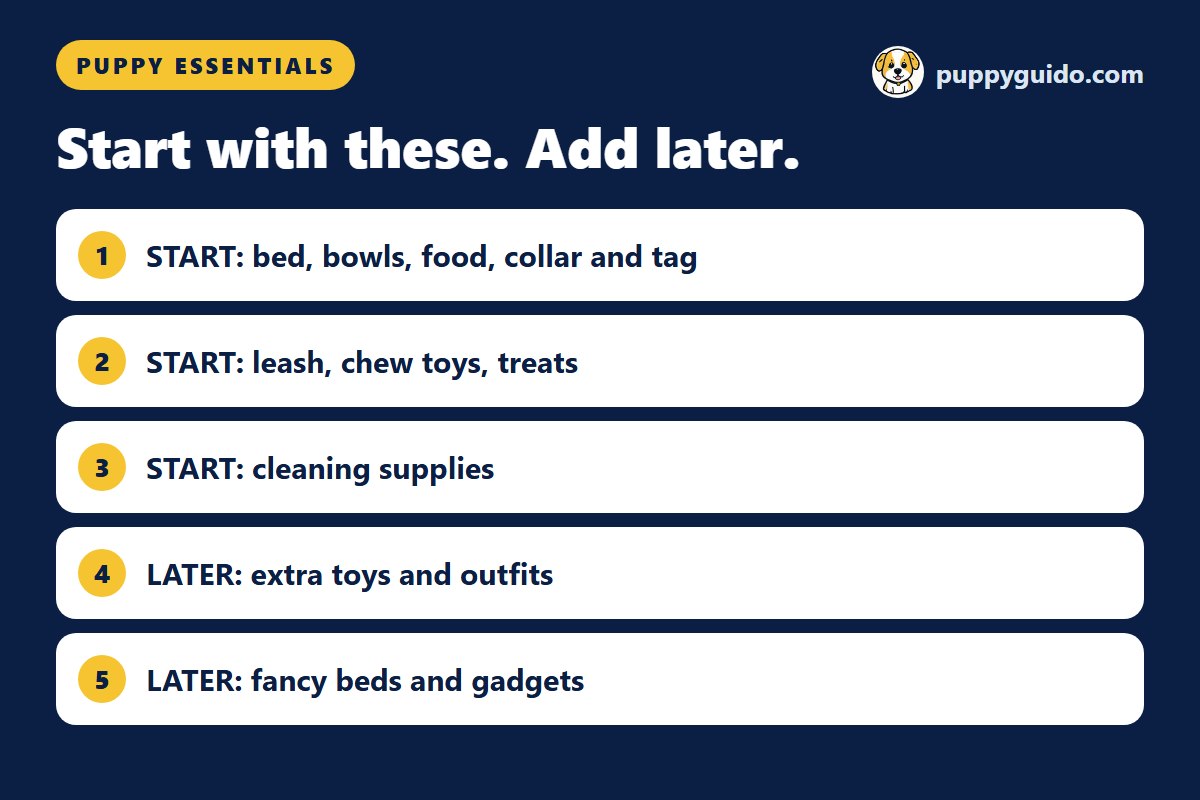
Here is what to buy for a puppy first. These are the items we would not skip, even on a tight budget.
- A crate or playpen. This becomes the puppy's bed, quiet space and safe place when you cannot supervise. Choose one with a divider so you can make the space bigger as they grow. If you are not sure how to use it, our guide to crate training a puppy walks through the early weeks step by step.
- Two bowls, one for water and one for food, in stainless steel or ceramic so they are easy to wash every day.
- Puppy food, ideally the same brand and formula the breeder or shelter used. If you need to change it, do it slowly over a week or more, and check with your vet first. See our puppy feeding schedule for meals by age.
- A soft collar or harness with an ID tag that has your phone number on it. If your area uses microchips, register one and keep the details up to date.
- A standard leash. Long retractable leads are hard to control in the early weeks and easy to drop.
- An enzyme-based cleaner. Ordinary cleaners can leave a smell that draws a puppy back to the same spot. Accidents will happen, and this is the one item you will use every single day.
- A few chew toys in different textures and sizes, plus your supervision. For more on this, see our piece on how to stop puppy biting.
- Small, soft training treats for rewards. Pick ones your puppy can eat quickly so training does not stall.
- Poop bags, a brush suited to the coat, and washable bedding.
Nice-to-haves that can wait
Plenty of things look charming in a shop window and earn their keep later, or never. Think of this section as a wish list you can return to in a month.
- A designer bed. Many puppies prefer the crate floor or a plain washable blanket, and they can chew through a fancy bed quickly.
- Interactive puzzle feeders. Useful for some puppies, but a puppy still learning the basics often does better with simple meals and short, calm play.
- Pet cameras and automatic feeders. Helpful if you work long hours, but they do not replace a routine you keep yourself.
- A wardrobe of sweaters and outfits. Some puppies love them and many do not, and a coat that makes walks uncomfortable is no use.
- Pee pads. Some families use them, especially in apartments, but they can slow house training if the puppy learns that indoors is fine. Talk through the plan with everyone in the household before buying a stack.
To be honest, a few nice-to-haves become must-haves for certain homes. A cold climate may call for a warm coat. A puppy who will be alone for long stretches may need a different feeding plan. You will know which of these applies to you once you have lived with your puppy for a little while.
Puppy-proof your home
Your home is the puppy's whole world now, and puppies explore with their mouths. Puppy-proofing costs less than most people expect, and it prevents the kind of stressful emergency nobody wants at midnight. Plan to walk through your home at least once before pickup day, and work through this list:
- Get down to puppy height and look for loose cords, dangling curtain pulls, and small objects like coins, buttons and hair ties.
- Move medicines, cleaning products, chocolate, anything containing xylitol, and toxic houseplants out of reach.
- Tuck electrical cords away or cover them with cord protectors.
- Use baby gates to block stairs and off-limits rooms, and keep outside doors closed when you are not watching.
- Set up one small area for the first night, with the crate, water and a few familiar items. Our article on the first night at home covers what to expect.
Keep xylitol-containing foods, human medicines and toxic plants well out of reach, and call your vet or an animal poison helpline right away if your puppy swallows something.
What to buy by age
Puppies grow fast, and their needs shift every few weeks. Here is a rough guide, with the caveat that your puppy will set their own pace. A puppy who picks up house training quickly may need the early setup for less time, while a slower puppy may need it for longer. Watch your puppy, not the calendar.
| Age | Main focus | Worth having by then |
|---|---|---|
| 8 to 10 weeks | Settling in and sleeping | Crate, bowls, food, enzyme cleaner, ID collar |
| 10 to 12 weeks | Potty routine and short outings | Leash, poop bags, training treats, a few chew toys |
| 3 to 4 months | Teething and rising energy | Durable chews, a brush, a nail trimmer |
| 4 to 6 months | Manners and a growing body | A harness sized to fit, a bed sized for the adult dog, extra toys |
Eight to ten weeks: settling in
Most of your energy goes into sleep, meals and the first vet visit. Expect nights to be rough for a while. Keep the setup simple: crate, bowls, the familiar food, and the enzyme cleaner within reach. Hold off on the toy aisle for now. A puppy this age is often happier with a plain soft toy and your company than with a shelf full of choices.
Ten to twelve weeks: routines and first outings
The potty routine is taking shape now, and you will be carrying a lot of poop bags. The leash matters more, and treats make walks and car rides more pleasant. If you want a clear sense of when to take your puppy out, our potty schedule by age is worth bookmarking. Accidents still happen at this stage, and that is normal.
Three to four months: teeth and big energy
Teething often peaks in this window, and your puppy will want to chew nearly everything. Durable chew toys are worth the money here, because cheap ones can be torn apart and swallowed. Keep a brush and nail trimmer handy and practice short handling sessions so nail trims do not turn into a wrestling match. Some puppies chew more when bored, so rotate toys rather than buying more of them.
Four to six months: manners and matching gear
Your puppy is starting to look like an adult dog, which is the right time to measure for a harness and a proper bed. Wait until the fastest growth has slowed before buying size-specific gear, since many puppies outgrow sizes sooner than expected. This is also when a few training tools earn their place. Keep everything positive: rewards, patience and short sessions.
Spending wisely without cutting corners
Budget-friendly setups are very possible. The trick is to spend on the things you will use every day and wait on the rest. A sturdy crate with a divider often beats two smaller crates, because you will use the same one for years. Enzyme cleaner and good food are worth a little extra since they matter daily. Chew toys deserve careful choices too. A few durable ones that last are a better buy than a box of cheap ones that break within a week.
Secondhand gear can work, with care. A used crate is fine if it is clean, undamaged and free of sharp wires or broken latches. Ask the breeder or shelter what they recommend, too, since they often know what works for their own puppies. If you are focused on puppy essentials on a budget, start with the must-haves and let your puppy's habits guide the rest. Our new puppy checklist is a shorter version you can use as a starting point.
Grooming and health basics
Puppies learn grooming the same way they learn everything else, through short, rewarding practice. Touch paws, lift lips and handle ears while you give treats, so a nail trim or teeth check later feels normal. Brush for a few minutes several times a week, and stop before your puppy gets fed up.
Book the first vet visit soon after pickup. Ask about vaccines, parasite prevention and which food suits your puppy's size and age, and bring your questions written down. Please do not give medicines or supplements because a friend's dog took them. Every puppy is different, and what worked for one dog can be wrong for another.
When to ask a professional
Trust your gut. If your puppy stops eating, vomits more than once, has diarrhea that will not settle, seems unusually weak or sleepy, strains to urinate, or may have swallowed something, call your veterinarian right away. Do not wait to see whether it passes.
Behavior concerns deserve help too. Biting that breaks skin, fear that gets worse instead of better, or a puppy who cannot settle at all can be easier to handle with support. A trainer who uses positive reinforcement can help you build a plan that fits your home. Asking for help early is a sign of good care, not failure.
If you would like everything in one place, including a week-by-week plan for the first month, grab the free checklist and guide here: Get the free New Puppy Survival Guide.
Frequently asked questions
What do I need to buy before my puppy comes home?
Before pickup, you will want a crate or pen, two bowls, the food your puppy is already eating, a collar with an ID tag, a leash, a few chew toys, an enzyme-based cleaner for accidents, and poop bags. Those cover sleep, meals, walks and the messes that come with the early weeks. Everything else can wait until you see what your puppy actually uses.
Do I really need a crate for a puppy?
A crate is not the only option, but many families find it helpful. It gives the puppy a den-like space to sleep and rest, and it keeps them safe when you cannot supervise. Used gently and positively, with the crate kept as a cozy place rather than a punishment, it can make the first weeks calmer for everyone. If you are unsure, read up before you commit.
Are puppy pads necessary for house training?
Not for everyone. Some families use pads in apartments or during bad weather, while others skip them and take the puppy outside on a regular schedule. Pads can make house training more confusing for some puppies, because they may learn that indoors is an acceptable place to go. If you do use them, agree on the plan with everyone in the household first.
What toys are safe for a teething puppy?
Look for sturdy chew toys sized so the puppy cannot swallow them whole, and supervise chewing, especially at first. Rotate a few toys rather than offering everything at once, so they stay interesting. Remove any toy that cracks, crumbles, or has a loose part. If you have questions about chewing or swallowing, contact your veterinarian.
How much should I spend on puppy supplies for the first month?
The right amount depends on your puppy's size, your home, and what you already own. Focus first on daily essentials such as food, a sleep space, cleaning supplies and a leash. Buy durable items where they will get heavy use, and wait on extras. Writing the list, checking what you already have, and adding only what the first two weeks require keeps the budget manageable.
How do I puppy-proof a house quickly?
Start by getting down to puppy height and looking for cords, small objects, and anything that could be swallowed. Move medicines, cleaning products, and toxic foods out of reach, including anything containing xylitol. Use gates to block stairs and off-limits rooms, and set up one small safe area for the first nights. Check again after a week, since puppies find new hiding spots quickly.
Disclaimer. PuppyGuido provides general educational information and does not replace advice from a qualified veterinarian or professional trainer.
Keep reading
Puppy Harness or Collar? A Simple Guide for New Owners
Collar or harness? Here is how to choose for comfort, ID tags, walks, and the growth spurts that make sizing tricky.
Read articlePuppy Playpen: Do You Need One and How to Use It
A puppy playpen can be a safe, short-term play space, as long as you use it with care and never as long-term confinement.
Read article
First Week With Puppy: What to Do Day by Day
Your puppy is home and you are not sure what comes next, so here is a calm, practical plan for the first seven days.
Read article