
Puppy Crying at Night? 7 Things to Check Before You Panic

Puppy Crying at Night? 7 Things to Check Before You Panic
It is 2 a.m., the house is dark, and your new puppy is crying. Your heart sinks, and a small voice in your head asks whether you made a mistake. You did not. Crying on the first nights is one of the most common things new puppy parents go through, and it almost always gets better.
Your puppy has just left their mother and littermates. Every smell, sound and surface is new, and for the first time in their life they may be sleeping alone. The goal is not to stop the crying at all costs. It is to work out why your puppy is crying and respond calmly. Here are seven things to check, in the order that most often solves it.
1. Do they need to go potty?
Young puppies cannot hold their bladder all night. If the crying sounds urgent or restless, or your puppy is circling or sniffing the floor, take them out quietly. Keep the lights low, use the same spot and the same calm word each time, and skip the play. Back to bed straight after.
It helps to take them out right before bed and to think of one or two planned night trips for the first weeks. A planned trip is calmer than a rushed one, and you stay in charge of the routine rather than reacting to every sound.
2. Are they lonely?
Puppies are social animals, and a silent room can feel very big. A sleeping spot near your bed for the first few nights can help a lot. Some owners place the crate in the bedroom, then move it a little further each week as the puppy gets more confident.
A calm hand through the crate door, or simply hearing your voice say "settle", is often enough. You are not creating a bad habit by being close during the first nights. You are building trust.
3. Is the temperature comfortable?
Check that the sleeping area is not too hot or too cold, away from drafts and direct heat. Make sure the bedding is safe and cannot be chewed up and swallowed. If your puppy keeps pushing the blanket away, they may simply be warm.
4. Are they overtired or overstimulated?
An overtired puppy often cries and bites more, just like an overtired toddler. If the evening was busy with visitors, play or car rides, settling can be hard. Keep the last hour before bed calm: quiet cuddles, no wild play, a last potty break, then lights down.
Daytime naps matter just as much. Puppies need a lot of sleep, and a puppy who missed their naps will often have a harder night. Our guide to the puppy nap and sleep schedule covers what is normal.
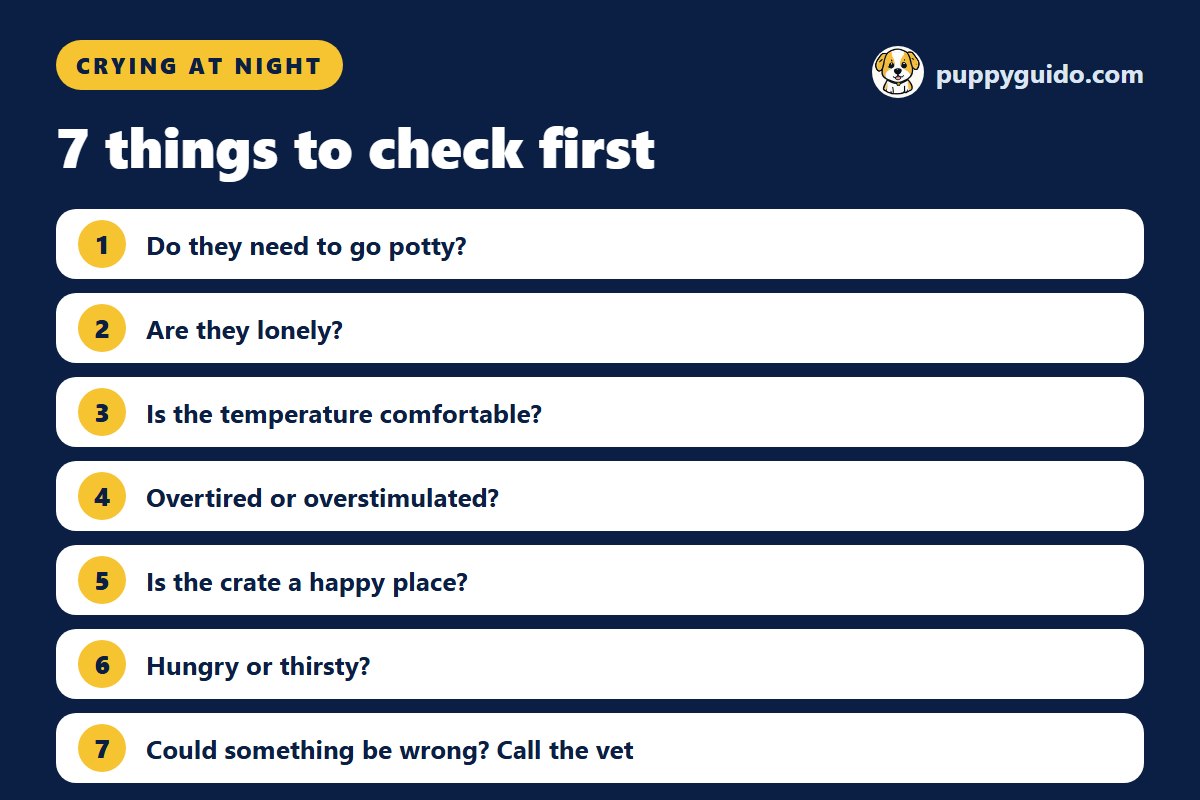
5. Is the crate a happy place?
If the crate was introduced suddenly, it can feel scary. Feed meals near or inside it, toss in a treat, and keep early sessions short and positive. Never use the crate as punishment. If your puppy is truly panicking in the crate, go back a step and make it a pleasant place before expecting a full night.
6. Are they hungry or thirsty?
Follow the feeding schedule recommended by your vet or breeder. Fresh water should be available during the day, and your vet can advise on evening water and night feeding for your puppy's age and size. A very small puppy may have different needs from a larger one, so check rather than guess.
7. Could something be wrong?
If the crying is unusual, constant, high-pitched, or comes with vomiting, diarrhea, limping, a swollen belly or other signs of illness, contact your veterinarian. Trust your instincts: you know when something feels different.
What different sounds can mean
| What you hear | What it often means | What to try |
|---|---|---|
| Short whimpers when you leave the room | Mild loneliness | Stay calm, wait a moment, then reassure quietly |
| Restless, pacing, sniffing | Needs a potty trip | Quiet trip outside, no play |
| Loud, building crying at bedtime | Not used to the crate or being alone | Move the crate closer, add a treat, go slower |
| Sudden, sharp cry or panic | Discomfort or fear | Check safety and comfort, call the vet if unusual |
A simple calm bedtime routine
- Dinner at the same time each evening.
- A short, gentle play session, then quiet time.
- Last potty break right before bed.
- Lights down, same bed, same cozy spot every night.
- If they wake and need to go out, keep it boring: potty, then back to bed.
Repeating the same steps in the same order helps your puppy learn that bedtime is predictable and safe. In a few days many puppies start to settle faster.
What not to do
Avoid scolding or punishing a crying puppy. Fear makes settling harder, and a frightened puppy is not a learning puppy. Try not to turn every cry into a play session either, since late-night games teach the wrong lesson. Consistency and patience work better, and most puppies improve within days to a few weeks.
Should you ignore it or comfort your puppy?
This is the question every new owner asks, and the honest answer is: it depends on why your puppy is crying. Ignoring a real need (a full bladder, fear, cold) does not teach independence. It teaches your puppy that calling does not work when they really need help. On the other hand, answering every single whimper with play and cuddles can turn night into a social hour.
- Respond to needs: potty trip, comfort, safety. Keep it quiet and short.
- Wait a few minutes if your puppy is just protesting and settling. Many puppies quieten on their own.
- Stay boring: low light, soft voice, no play, no treats other than a small reward after a potty trip.
- Do not punish. A scared puppy cannot learn to be calm.
What to expect by age
| Age | Night trips | What is normal |
|---|---|---|
| 8 to 10 weeks | Often 1 to 2 | Crying, restlessness, short sleep stretches |
| 10 to 12 weeks | Often 1 | Gradually longer stretches, still some crying |
| 3 to 4 months | 0 to 1 | Many settle faster, some regress when routines change |
| 4 to 6 months | Often none | Most sleep much longer, occasional setbacks |
These are common patterns, not rules. Every puppy is different, and your vet can advise on your puppy's needs.
The first three nights
- Night 1: keep the sleeping spot close, plan a quiet potty trip once or twice, and expect a short, noisy night. Rest in the daytime if you can.
- Night 2: repeat the exact same routine. Small improvements, like a shorter crying spell, count as progress.
- Night 3: keep the routine, stretch the gap between trips by 15 to 30 minutes if the night went well, and celebrate the small wins.
Our guide to the first night at home has a full setup checklist.
Comfort items that can help
Some puppies settle faster with a soft blanket that smells of home, a safe chew toy, or a plush toy with a gentle heartbeat or warmth. These can help, but they are not a replacement for a routine and a potty trip. Choose items without small parts, supervise at first, and remove anything your puppy tears apart. Keep the crate comfortable with washable bedding. For crate basics see crate training a puppy.
How long does the night crying last?
Many puppies improve in a few days, and most are much calmer within two to four weeks. Progress is rarely a straight line. A new routine, teething, a trip or an illness can bring a short setback. If you keep the routine and the calm responses, the nights become quieter. If your puppy is still distressed after several weeks, or the crying seems to be panic, speak to your vet or a qualified trainer.
When to ask a professional
If your puppy is distressed for long periods, will not eat, seems unwell, or you are worn out and worried, talk to your veterinarian or a qualified trainer. Asking for help early is a good sign, not a failure.
Want the full first-week plan, with a night routine and checklists? Get the free New Puppy Survival Guide. If the hard nights are wearing you down, our calm 30-day plan may help too: The Puppy Blues Rescue Plan.
Related reading: if the crying also happens when you leave the room, read about puppy separation anxiety, and for noisy evenings see puppy barking.
Frequently asked questions
How long will my puppy cry at night?
It varies. Many puppies settle noticeably within the first week, and most are much calmer within two to four weeks. If the crying is not improving or is getting worse, speak to your vet or a qualified trainer.
Should I ignore my puppy crying at night?
Not if there is a real need such as the potty, comfort or safety. A short, calm check helps. Avoid turning the night into play or attention that rewards crying. Respond to needs, stay boring and keep the routine.
Is it okay for my puppy to sleep in my room?
Yes. Many families keep the crate or bed in their bedroom for the first weeks and move it gradually later. Choose what suits your home and keep it consistent.
How many times will my puppy need to go out at night?
Very young puppies often need one or two quiet trips. This usually drops to one and then none as they grow. Your vet can advise on your puppy's age and size.
Do heartbeat toys help a crying puppy?
Some puppies find them comforting, but they work best together with a routine and a potty trip. Supervise at first and remove any toy your puppy chews apart.
Disclaimer. PuppyGuido provides general educational information and does not replace advice from a qualified veterinarian or professional trainer.
Keep reading
What Age Do Puppies Sleep Through the Night?
Between about 3 and 6 months, most puppies settle into longer nights, and a few simple habits can help your puppy settle in along the way.
Read articleHow to Choose the Right Crate Size for Your Puppy
A crate that fits today, still works in six months, and stays clean enough to be her safe place. Here is how to get there.
Read article
Puppy Nap and Sleep Schedule: What Is Normal and How to Plan Your Day
What is normal puppy sleep, and how to plan naps and bedtime without a rigid clock.
Read article